
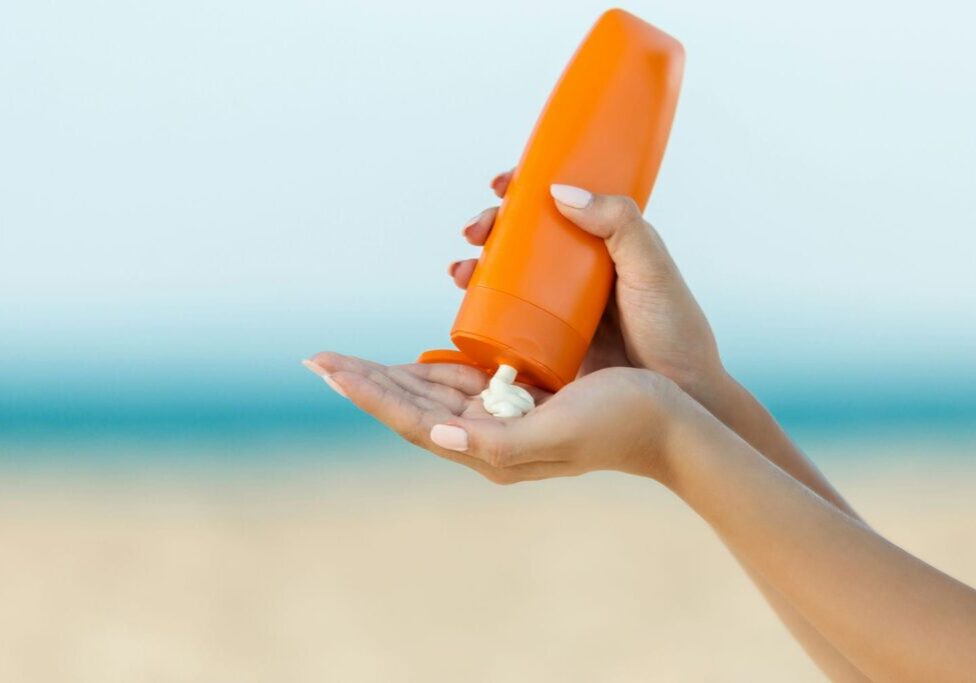
If you’re importing sunscreen products into Canada, the “right pathway” depends on your active ingredients and your SPF representation. In plain terms: most true sunscreen products need either a Natural Product Number – NPN (natural health product) or a Drug Identification Number – DIN (non-prescription drug), and only a narrow set of “no SPF” products stay in the cosmetic lane.
We’ve been importing regulated health and beauty products into Canada since 2012, and we know exactly where the cosmetic line ends and the NPN or DIN lane begins. If your sunscreen doesn’t belong in cosmetics, we’ll tell you early, before you build your launch plan on the wrong pathway and pay for it later.
The 60-Second Rule: SPF Claims Push You Out Of “Cosmetic” Territory
If your label, PDP, or ads say SPF, “UV protection,” “sunburn protection,” or anything that creates the net impression of sun protection, you are no longer in normal cosmetic territory.
Teams often try to “keep it cosmetic” while still hinting at SPF. That usually fails because sunscreen protection is treated as a therapeutic function, and sunscreen products in Canada are regulated as natural health products or non-prescription drugs (not cosmetics) based on active ingredients and claims. Plan the right authorization early, then write claims that match that authorization.
Primary Vs Secondary Sunscreen: The Classification Detail Most Teams Miss
Not all sunscreen products look like a beach sunscreen. Health Canada’s monographs distinguish primary sunscreens (products primarily intended to prevent sunburn) from secondary sunscreens (makeup or skincare that carries limited sunscreen claims). This matters because a tinted moisturizer with SPF often gets built and marketed like a cosmetic, but the sunscreen component still pulls it into the NPN or DIN world.
Bottom line: you need to answer two questions before you pick a pathway:
- Is it being sold primarily as sunscreen, or as makeup/skincare with limited sunscreen claims
- Do the actives map to the NHP table or the drug table in the applicable monograph
Those answers drive the rest of your import plan, including licensing, labelling, and who can act as importer.
What Health Canada Means By “Primary Sunscreen”
A “primary sunscreen” is a product intended to be applied to skin to prevent sunburn and related conditions of sun exposure. Health Canada’s Primary Sunscreen Monograph is built around that purpose and sets the conditions to receive market authorization (DIN or NPN) when you fit the monograph.
This is where many imports go sideways: if there is no explicit primary cosmetic function evident from the brand and packaging, Health Canada can deem the product a primary sunscreen even if you wanted it positioned as skincare. That is a strategy problem first, then a regulatory problem.
What Health Canada Means By “Secondary Sunscreen”
A “secondary sunscreen” is typically applied to the face/skin as makeup or skincare and carries limited sunscreen claims. Think: foundation with SPF, tinted moisturizer with SPF, or a daytime moisturizer that leads with cosmetic benefits but includes sunscreen protection.
However, “secondary” is not a free pass. The Secondary Sunscreen Monograph still ties market authorization to your medicinal ingredients and still points you to NPN vs DIN depending on whether your UV filters fall into the NHP table or the drug table. You still need a pathway that matches your formula and your claims.
Which Pathway Applies To Your Sunscreen Product?
This is not a substitute for a full label and formulation review, but it will stop most expensive wrong turns.
| What You’re Selling | Typical “Signal” | Likely Canadian Pathway | What Must Be On Pack |
| Mineral-only sunscreen | Zinc oxide and/or titanium dioxide only | NHP Sunscreen (NPN) | 8-digit NPN |
| Chemical-filter sunscreen | Any chemical UV filter present | Non-Prescription Drug (DIN) | 8-digit DIN |
| Mixed mineral + chemical | Both types in one formula | Non-Prescription Drug (DIN) | 8-digit DIN |
| Skincare/makeup with limited SPF claims | “Secondary sunscreen” style positioning | NPN or DIN (depends on filters) | NPN or DIN |
| Product with no SPF representation | No UV/sun protection claims anywhere | Cosmetic + CNF (if truly cosmetic) | CNF filing (post-sale) |
Pathway A: Natural Health Product Sunscreen (NPN)
If your sunscreen can legitimately sit in the NHP lane, the NPN route is often the cleaner operational path. It is still regulated and still expects compliant labels and evidence, but it can be more straightforward than teams expect when the formula matches the monograph conditions.
The biggest lever is formulation discipline. Mineral-only UV filters typically map to the NHP side, and once you “accidentally” add a chemical UV filter, you typically flip into DIN territory. That single decision changes your timeline, your labelling, and your import licensing requirements.
When An NPN Pathway Is Realistic
An NPN pathway is most realistic when your medicinal ingredients match the monograph’s NHP table, which (in practice) often means titanium dioxide and/or zinc oxide as the only UV filters, within the permitted limits. This is the common pattern for mineral sunscreens and many “reef-friendly” positioning strategies.
“Mineral-based” marketing is not enough. You need to confirm there are no drug-table UV filters hiding in the INCI list, and you need to confirm the product’s overall sunscreen representation fits the primary or secondary monograph conditions. If you skip that work, you can end up rebuilding labels after production.
What You Need To Plan For (What Changes Vs Cosmetics)
Moving from cosmetics to an NPN sunscreen changes your compliance workload. You are now aligning to a therapeutic framework, which means your claims, directions, warnings, and evidence need to match the monograph expectations, not just marketing preference.
It also changes who can import. Natural health products require the right Canadian regulatory footing to bring product in and keep it compliant on an ongoing basis. This is exactly where a licensed Canadian partner like Progress Therapeutics can reduce friction, especially if your team is outside Canada and you need local accountability.
Practical Import Readiness Checklist For The NPN Route
Use this checklist before you approve final artwork or book freight:
- Confirm whether you are “primary” or “secondary” sunscreen based on product purpose and net impression.
- Verify UV filters are limited to the NHP table ingredients and within allowed limits.
- Align all sunscreen claims, directions, and warnings to the applicable monograph conditions.
- Ensure bilingual labelling and Canadian market packaging readiness across all SKUs.
- Confirm importer-of-record responsibilities are covered and you have a Site Licensed Importer like Progress Therapeutics before product lands in Canada. You will need to make Importer decisions at least 3 to 6 months prior to importation expectations.
Pathway B: Non-Prescription Drug Sunscreen (DIN)
If your sunscreen contains any chemical UV filter, or if it contains a mix of chemical and mineral UV filters, you should assume you are in DIN territory until proven otherwise. Health Canada’s consumer-facing sunscreen guidance makes this split explicit and ties DIN products to chemical filters (and combinations).
The DIN route is not “worse,” but it is different. It typically brings more structure around establishment licensing, GMP expectations, and the evidence and label controls tied to drug product oversight. That difference matters a lot when you are planning launch dates and supply continuity.
When A DIN Is Required
A DIN is required when your sunscreen includes one or more UV filters that Health Canada classifies as drug ingredients. In practical terms, common chemical UV filters (and mixed formulas) tend to trigger DIN status. Health Canada states that products containing chemical UV filters have an 8-digit DIN on the label, and combination mineral + chemical products also have a DIN.
If your product is a “secondary sunscreen” (makeup/skincare with limited sunscreen claims), the same ingredient logic still applies. The Secondary Sunscreen Monograph still treats products as non-prescription drugs if they contain at least one ingredient from the drug table.
What Typically Changes Vs The NPN Route
DIN planning often changes the conversation around your Canadian regulatory footprint. If you are importing a drug product, the importer-of-record role and establishment licensing expectations carry more weight, and the cost of mistakes at the border and with Health Canada is usually higher.
It also changes your “label tolerance.” Teams sometimes try to utilise labels from the US, EU, or UK as-is, then discover the Canadian label set needs edits to match monograph and Canadian regulatory expectations. Fixing that after goods arrive is the expensive version of the work.
Practical Import Readiness Checklist For The DIN Route
Before you approve production or ship inventory:
- Confirm UV filters include at least one drug-table ingredient and treat the product as DIN-bound.
- Determine whether the product is “primary” or “secondary” sunscreen and align to the correct monograph.
- Align claims, directions, and warnings to what your DIN pathway supports.
- Ensure you have contracted an importer-of-record with a Drug Establishment Licence (DEL) such as Progress Therapeutics, and that release processes are defined before shipment. You will need at least 8 to 10 months to prepare for importation through a DEL licensed Importer.
- Build a “what if CBSA asks” documentation pack before the shipment leaves for Canada.
Pathway C: Cosmetic CNF (Only If You Remove Sun-Protection Representation)
If you remove all sunscreen representation, your product might be able to live as a cosmetic. That means no SPF, no “UV protection,” no “sunburn protectant,” and no implied sunscreen positioning through the net impression created by labels and advertising. Health Canada’s interface guidance is the right place to understand how regulators evaluate representation and net impression.
This is not a loophole for sunscreen products. It is a separate product strategy. If UV protection is the value proposition, forcing the product into CNF territory usually just creates a bigger rework later when retail, consumers, or regulators challenge the mismatch. Essentially, your product cannot claim sunburn protection without falling into NPN or DIN classification.
When It Can Be A Cosmetic
It can be a cosmetic when the product’s purpose and representation stay in the appearance lane, and the formula does not support a therapeutic sunscreen claim. Typical cosmetic claims are cleansing, moisturizing, smoothing, and appearance-related benefits, not prevention of sunburn.
If you are tempted to keep “just a little SPF language,” you should consider alternative wording. That tends to pull you back into sunscreen classification, where the expectation is a DIN or NPN. If the market demands SPF, plan the DIN or NPN properly instead of gambling on wording.
What CNF Actually Is (And Isn’t)
A Cosmetic Notification Form (CNF) is a post-market notification, not a pre-market approval. Health Canada requires manufacturers and importers to notify within 10 days after first sale of a cosmetic in Canada, and failure to notify may lead to products being denied entry or removed from sale.
That timing is why CNF gets misunderstood. You can file CNF perfectly and still have a product that is misclassified, mislabeled, or over-claimed. CNF is necessary for cosmetics, but it does not guarantee your product has been classified correctly.
If your team is rewriting copy to stay cosmetic, you need a tighter claims framework than “remove obvious medical words.” We break down what you can and can’t say, plus the “net impression” trap, in Cosmetic Claims In Canada: What You Can And Can’t Say.
Import Planning: What Changes Depending On NPN Vs DIN Vs CNF
Once you choose the pathway, your import plan becomes easier. You stop debating hypotheticals and start building to a defined set of requirements: label rules, evidence expectations, importer responsibilities, and go-to-market timing. That clarity is what prevents last-minute relabelling, border holds, and “surprise” regulatory work.
The mistake we see most often is sequencing. Teams order packaging, book production slots, and build retail launch dates before the classification decision is settled. With sunscreen, that order is backwards.
Timelines And Launch Risk
CNF (cosmetics) is typically fast because it’s post-market, but you still need compliant labels and an accurate classification decision. If you get classification wrong, the “fast” route turns into delays at the worst time, usually after inventory exists.
NPN and DIN pathways require market authorization that should be treated as a critical path item. Your timeline risk is driven by how closely you fit the monograph conditions and how clean your documentation is. Build launch plans around the realistic regulatory path, not the optimistic one.
Packaging And Labelling Workload
For sunscreen products, labelling is not just bilingual text. It is the full set of directions, warnings, and claims aligned to what the monograph and authorization support. When this work is done early, you avoid art rework and inventory write-offs.
If you are also managing cosmetics in the same brand line, you need extra discipline to keep cosmetics and sunscreen SKUs from drifting into each other’s claim lanes. This is where a unified claims and labelling system across SKUs pays off.
The Importer-Of-Record Reality
Importing sunscreen into Canada is not just shipping. The Canadian importer-of-record is the party regulators expect to be accountable for compliant entry, ongoing records, and responding quickly if questions arise. That is especially true when your product is regulated as an NHP or drug.
Progress Therapeutics has been doing this since 2012, and we act as a leading Canadian importer of record for Health Canada-regulated products, with the licences (DEL for prescription and OTC, and a Site Licence for natural health products) that sunscreen programmes often depend on.
If you want a fast, practical review, book a consultation and we’ll tell you which pathway is defensible and what needs to change before you ship.
Usually, no. Health Canada states that sunscreens in Canada are classified as non-prescription drugs or natural health products, depending on active ingredients, and authorized products must carry an 8-digit DIN or NPN on the label. A product can only stay cosmetic if you remove sunscreen representation entirely and it truly functions and presents as a cosmetic.
Start with your UV filters. Health Canada explains that chemical UV filters are classified as drug ingredients and typically result in a DIN, while physical UV filters (zinc oxide, titanium dioxide) are classified as natural ingredients and products containing only these typically have an NPN.
Primary sunscreen products are intended to prevent sunburn and related conditions of sun exposure. Secondary sunscreen products are applied as makeup or skincare products and carry limited sunscreen claims.
Not if you are representing sunscreen protection. SPF and UV protection claims generally push you into sunscreen classification, which requires an NPN or DIN depending on your active ingredients. If you remove all sunscreen representation, the product may be able to live as a cosmetic, but you still need cosmetic compliance and CNF filing rules.
No. Health Canada requires manufacturers and importers to notify a cosmetic within 10 days after first sale, and CNF is described as a monitoring tool, not a pre-market authorization. You can file a CNF correctly and still be non-compliant if the product is misclassified or the claims drift into therapeutic territory.
The most common causes are classification mismatches (cosmetic paperwork for an SPF product), missing or incorrect authorization expectations (no DIN/NPN where required), and label sets that do not align to the pathway you are importing under. A close second is incomplete documentation that prevents the importer from answering basic compliance questions quickly.
Sometimes, but do not assume. Canada’s pathway depends on the Canadian classification logic (including UV filter categorization) and the Canadian label expectations tied to DIN or NPN authorization. The safe approach is to treat Canada as its own launch: confirm your pathway, then confirm your label set and documentation are Canadian-ready before you move inventory.